

The public comment period on the U.S. Department of Agriculture’s proposal to repeal the 2001 Roadless Area Conservation Rule closes Tuesday, October 6, 2026. The rule protects the wildest backcountry of the George Washington National Forest, which supplies Shenandoah Valley drinking water and anchors its trails. It is crucial for everyone to submit a Roadless Rule Comment to voice their support for this important conservation measure.
Submit Your Comment by Tuesday, October 6 →
By Kyle Lawrence, Executive Director, Shenandoah Valley Bicycle Coalition
TL;DR · Key Takeaways
The U.S. Department of Agriculture (USDA) proposes to repeal the Roadless Rule, which has kept new road building and commercial logging out of the least-developed parts of national forests, including the George Washington National Forest in Virginia, since 2001. Public comments are due Tuesday, October 6, 2026, on regulations.gov (docket FS-2025-0001). The Shenandoah Valley Bicycle Coalition asks everyone who rides, hikes, fishes, or drinks Valley water to submit a short personal comment supporting Alternative 1, which keeps the rule in place, and to make sure to include a Roadless Rule Comment to emphasize their stance.
How do I submit a comment? It takes about two minutes
- Click the green button to open the official comment page on regulations.gov (docket FS-2025-0001), then click Comment.
- In the comment box, start with: “I support Alternative 1: keep the Roadless Rule in place.”
- Add one to three sentences in your own words, using the prompts below.
- Add your name if you’d like (it’s optional), review, and click Submit. Save your tracking number.
- Forward this post to a friend before the Tuesday, October 6 deadline.
What should I say in my comment?
Personal comments carry the most weight. Identical form letters are often counted together, while a specific sentence about your own experience stands on its own. Pick one or two of these prompts:
- Where do you go? Name a place on the George Washington National Forest where you ride, hike, hunt, fish, or camp, such as Shenandoah Mountain, Reddish Knob, or Little River.
- Why does it matter to you? Clean drinking water, quiet backcountry, wildlife, time outside with family and friends.
- Who depends on it? If you own or work for a business that serves visitors to the Valley, say so.
- What would change? Describe what new roads or logging would mean for the places you love.
Sample comment you can adapt
I support Alternative 1: please keep the 2001 Roadless Area Conservation Rule in place. I [ride / hike / hunt / fish] at [place] in the George Washington National Forest, and wild, roadless places like it are why I [live in / visit] the Shenandoah Valley. These areas protect the headwaters that supply our drinking water, including Harrisonburg’s Switzer Reservoir, and they support the outdoor recreation economy our communities rely on. The Forest Service already can’t maintain the roads it has. Please don’t add more. Keep the Roadless Rule intact.
Copy it, replace the bracketed parts with your own words, and add a sentence of your own if you can.
Comments submitted through partner sites such as saveroadlessforests.com are also uploaded to the official record. Commenting directly on regulations.gov puts yours on the record right away.
What is changing, and when is the deadline?
On August 20, 2026, USDA published a proposed rule and a Draft Environmental Impact Statement that would remove the 2001 Roadless Area Conservation Rule entirely, with no replacement. The comment period originally ended September 21. USDA extended it to October 6, 2026 (Federal Register notice 2026-18648, September 11, 2026). This is the last formal chance for the public to weigh in before a final decision.
What does the Roadless Rule actually do?
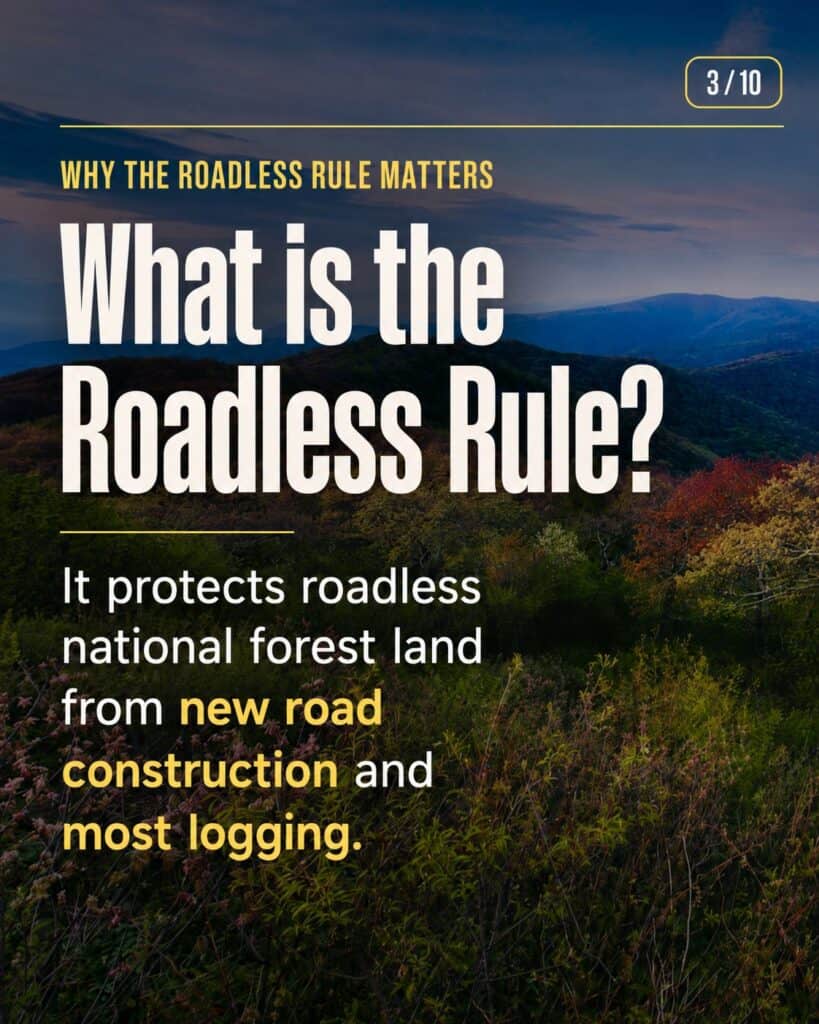
For 25 years, the rule has kept new road construction and commercial timber harvest out of roughly 45 million acres of national forest nationwide. Local reporting puts Virginia’s share at nearly 400,000 acres, much of it on the George Washington National Forest along the Valley’s western edge.
The rule does not close trails or end recreation. Hiking, mountain biking, hunting, fishing, wildfire response, and forest-health work all continue in roadless areas. What it prevents is permanent new road building in the last intact backcountry.
Why does it matter in the Shenandoah Valley?
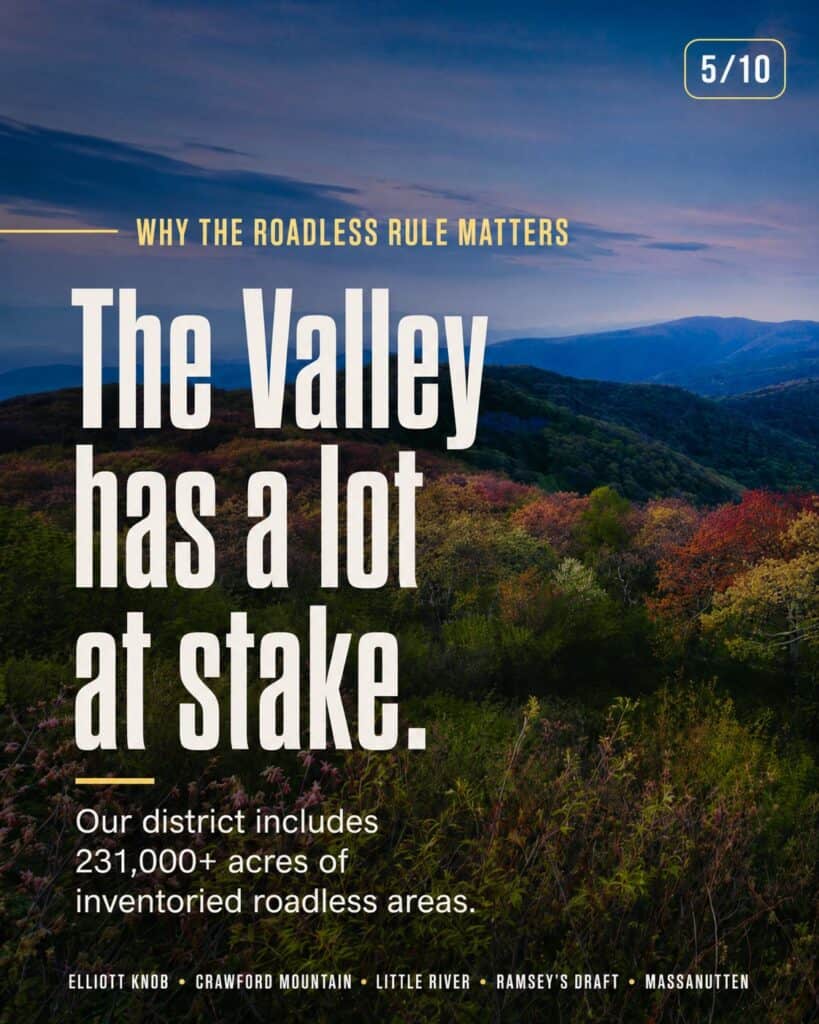
Importance of Submitting a Roadless Rule Comment
Drinking water
Roadless areas on Shenandoah Mountain feed the Dry River and Switzer Reservoir, part of Harrisonburg’s water supply. In September 2026, Harrisonburg City Council formally opposed the repeal, citing the risk that erosion from new roads and logging could send sediment into the city’s reservoir. Tell the Forest Service why clean water matters to you. Other Valley localities have taken the same position.
Trails and the outdoor economy
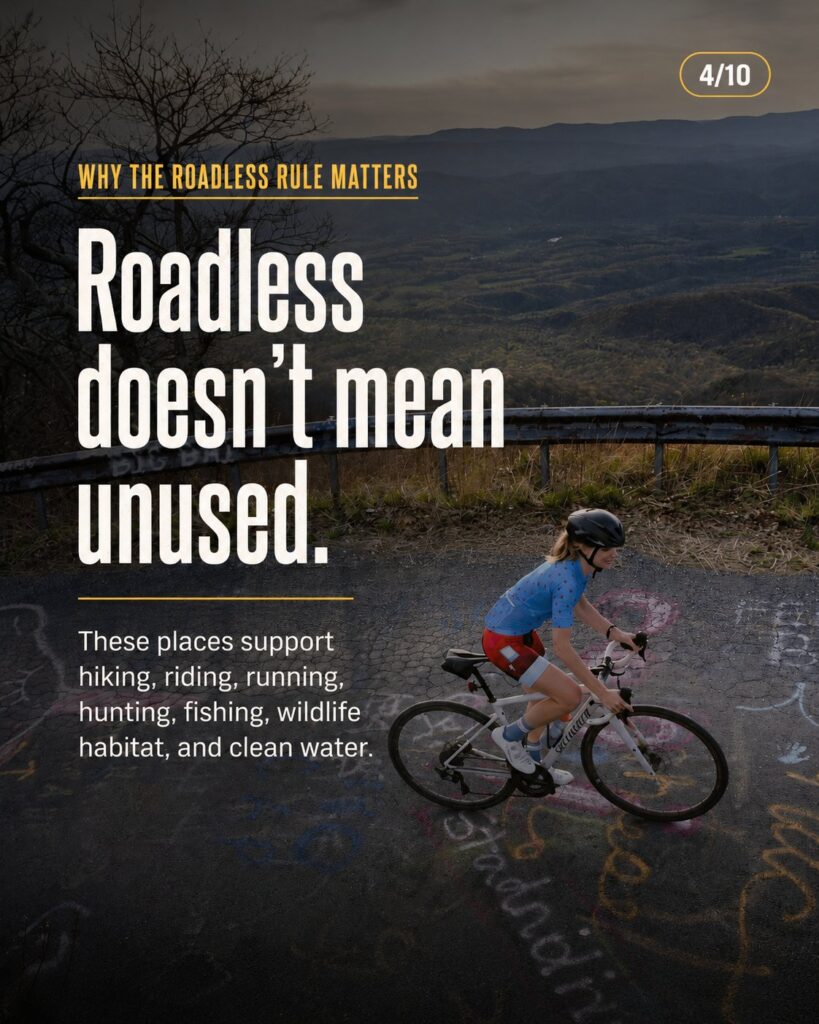
The International Mountain Bicycling Association (IMBA) and Outdoor Alliance count 10,794 miles of bikeable trail inside roadless areas nationwide, and hikers, anglers, hunters, and paddlers share those same landscapes. In the Valley, these places draw visitors who support local bike shops, restaurants, and lodging. Tell them which trails you ride.
Roads that the Forest Service can’t maintain
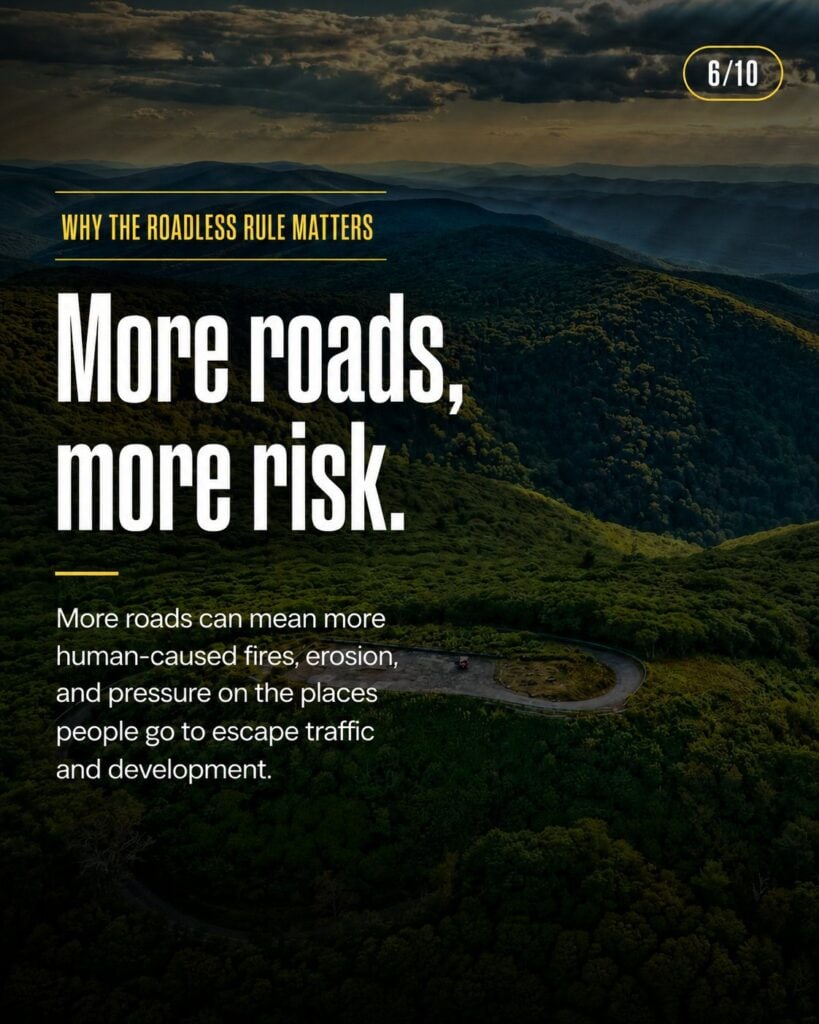
According to IMBA, national forests already carry about 380,000 miles of roads and a $3 billion maintenance backlog. More roads mean more washouts, more sediment in trout streams, and fewer resources for the trails that already exist. Comment before October 6.
Haven’t we done this before?
Yes. In 2025, when the USDA first proposed repealing the rule, IMBA reports that 99.2% of public comments opposed it. That same year, the Coalition asked supporters to speak up for the future of the Forest Service, and in June 2026 Coalition volunteer Thomas Culligan made the case for the Roadless Rule on this blog. USDA is moving ahead anyway, so the comment record matters more now than ever. Add yours today.
The Shenandoah Valley Bicycle Coalition builds and improves trails on public lands, advocates for safer walking and biking, and connects communities across the Shenandoah Valley. Learn more about the Coalition and its work on trails on public lands, or support this work with a gift.
Kyle Lawrence, Executive Director, Shenandoah Valley Bicycle Coalition




I believe in roadless areas in all the national forests (and other lands). Although I can no longer backpack into the wilderness, it should be left for future generations to come. Especially since our developed lands are more and more removed from nature.