The Case for the Roadless Rule
Guest Blog Post by Thomas Culligan
Public Lands Are Under Attack
To be frank, Public Lands across the country are under attack. A failed sell-off in last summer’s reconciliation deal, defunding of the National Park Service, eliminating the research branch of the Forest Service, moving the entire Forest Service from DC to Utah, the most anti-public land state in the country, and most recently, overturning a mining ban in the Boundary Waters Wilderness and Canoe Area in Northern Minnesota.
I am going to focus on the attempt at revoking the Roadless Rule, which has a very unique connection to the George Washington and Jefferson National Forest. I attended the Rally for the Roadless Rule on June 6th at the Briery Branch Reservoir. The group who attended heard from the local chapter of the Sierra Club, Virginia Wilderness Committee, and Friends of Shenandoah Mountain before a group of us shuttled up to the top of Reddish and hiked down.
While speakers were making the case as to why we need to support the roadless rule for clean drinking water, recreational benefits, hunting, and to support healthy habitat for wildlife, a bald eagle flew over the reservoir. How fitting is it that in a roadless area, where former President Clinton announced the Roadless Rule, we would be treated to the majestic sight of a bald eagle, the sign of freedom and our nation’s bird. Without the Roadless Rule, does this happen?
An Amendment Slipped In Late at Night
On Tuesday, June 9th, Senator Mike Lee from Utah introduced an amendment to a bipartisan wildlands fire bill very late the night before the bill was set to come before the Senate Energy and Natural Resources Committee, which Lee chairs. This is not shocking since Mike Lee and the state of Utah are the most outspoken when it comes to their belief that it is unconstitutional for the Federal Government to hold these lands in the public trust.
On June 10th, that bill with the amendment was up for a vote in Lee’s committee, and in a partisan party-line vote, it passed 11-9.
This amendment is not necessary; the USDA has already initiated the process to rescind the Roadless Rule, but that process requires public comment, and Mike Lee’s sticking this amendment into legislation is an attempt at a shortcut in his and this administration’s bid to erase the Roadless Rule, a long-standing conservation policy that protects 45 million acres of our public lands.
This fight is not over. This bill, while voted out of the committee, still needs to be passed by the full Senate. We still have time to remind Senator Lee of what we value, just like we did last summer when he attempted to sell millions of acres of public lands.
Urge Congress to Reauthorize the Legacy Foundation Fund
What Is the Roadless Rule?
So, what is the Roadless Rule? In October 1999, President Clinton rolled out the Roadless Rule on top of Reddish Knob in the George Washington National Forest (Yes, the same Reddish Knob many of us have suffered up to soak in the view of the valley). At the time, this action was among the largest land preservation efforts in our country’s history. The President went on to say,
“Through this action, we will protect more than 40 million acres, 20 percent of the total forest land in America in the national forests, from activities such as new road construction, which would degrade the land. We will ensure that our grandchildren will be able to hike up to this peak, and that others like it across the country will also offer the same opportunities. We will ensure that when they get to the top, they’ll be able to look out on valleys like this, just as beautiful then as they are now”.
President Clinton is right, our valley is beautiful, but the question we are being asked is, do we want to keep them in public hands, and do we want to enhance these lands not just for ourselves, but for future generations? I happen to think the answer to those questions is a resounding yes.
The rulemaking process for the Roadless Rule was not easy, and the Forest Service did not take it lightly. In February 1999, the Forest Service placed an 18-month moratorium on road construction while awaiting the completion of an overall road management policy. Then the President instructed the Forest Service to begin rulemaking to provide long-term protection for roadless areas.
Over the course of the next year, the Forest Service conducted what is considered the most comprehensive public engagement process in the history of federal rulemaking. What the Forest Service found was that the overwhelming majority of comments favored the roadless rules implementation. This was not a small sample size, nor did the Forest Service only hold meetings in favorable areas; they received 1.7 million comments on the proposed rule.
Shortly before President Clinton left office in January 2001, the Roadless Rule prohibited road building and logging in 58.5 million acres of national forest roadless areas. Logging was still approved with the purpose of reducing wildfire risk and improving habitat. The Roadless Rule is viewed as one of, if not the most important, rules for conservation and outdoor recreation.
Where We Stand Today
Now, where do we stand today? Call Tim Kaine and Mark Warner before this bill comes up for the full Senate vote.
The current administration is in the process of rescinding the Roadless Rule. This would open all of the previously protected areas to roadbuilding. mining, logging, and other extractive industries.
The process of resending the Roadless Rule will not be as extensive or robust as it was in the late 90’s and early 2000’s. The one thing that will be the same from the two comment periods is that the majority of the comments will be in favor of roadless areas. They are hell-bent on removing any policy they deem “red tape” for the extractive industries that fund their campaigns but leave the public to pay the bill when it comes time to start the reclamation process on that piece of land.
It is up to us, the people who ride, run, hike, hunt, and fish on these lands, to stand up and tell our elected officials in DC that we like this rule, and we value our public lands. I have talked about this before in my previous guest blog.
More Roads, More Fires
We can have thriving public lands where we can recreate and improve our forests, while also responsibly logging, mining, and drilling. Sadly, the policies that are being proposed and the laws that are coming out of Congress is anything but responsible.
These sustained attacks on our public lands, access, and environment really make you ask, who are these decisions intended to benefit?
In a hearing in front of the Senate, Tom Schultz, chief of the Forest Service, was asked by Senator Gallego of Arizona about fires being more frequent in roaded areas and the ignition sources for the fires coming from human activity. Chief Schultz responded,
“Over time, what we’ve seen is more human-caused fire starts than naturally caused. So, where the people are is where we tend to see more fires”.
So, even the chief of the Forest Service is acknowledging that more roads = more fires. The USDA’s own data shows that nearly 85% of wildfires are human-caused, and 90% of those fires begin within a half mile of a road. Moreover, fewer than 3% of all wildfires start in wilderness or backcountry areas.
So why are we trying to repeal a rule that protects our roadless areas and open more of the forest to human-caused fire? Does that benefit you and me? More importantly, does that make any sense?
I am all for better management of our public lands, and there is a strong argument to be made that we have mismanaged these lands, but all we have seen since January 20th, 2025, has been to sell the public lands, defund the agencies, and abandon every conservation principle that has made the US public lands system the envy of the world.
Count me as a big hell no on that. I am not going to stand by and watch our elected officials give up on the places that I love and make our community special, and that are a massive part of our rural economy. Abandoning public lands is abandoning our cultural heritage and stealing from future generations.
What’s at Risk Right Here in the Valley
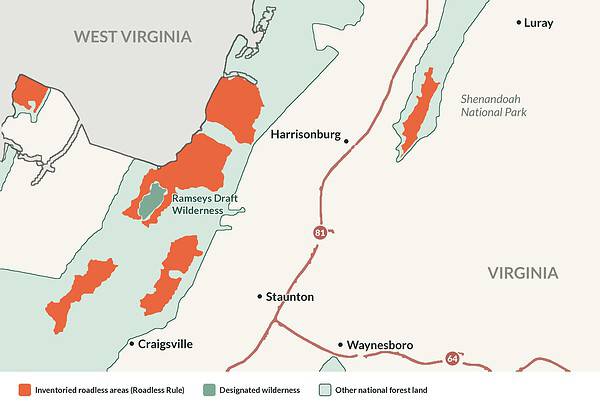
If you want to see a map of all the inventoried roadless areas, click here. Look at the map and try to find your favorite trails. Are they in a roadless area? The chances are that they are, or at least will see impacts from the rollback of this rule.
We have just over 231,000 acres of inventoried roadless areas in our district. That puts us close to the top when it comes to preserved national forests on the East Coast, and I am proud of that.
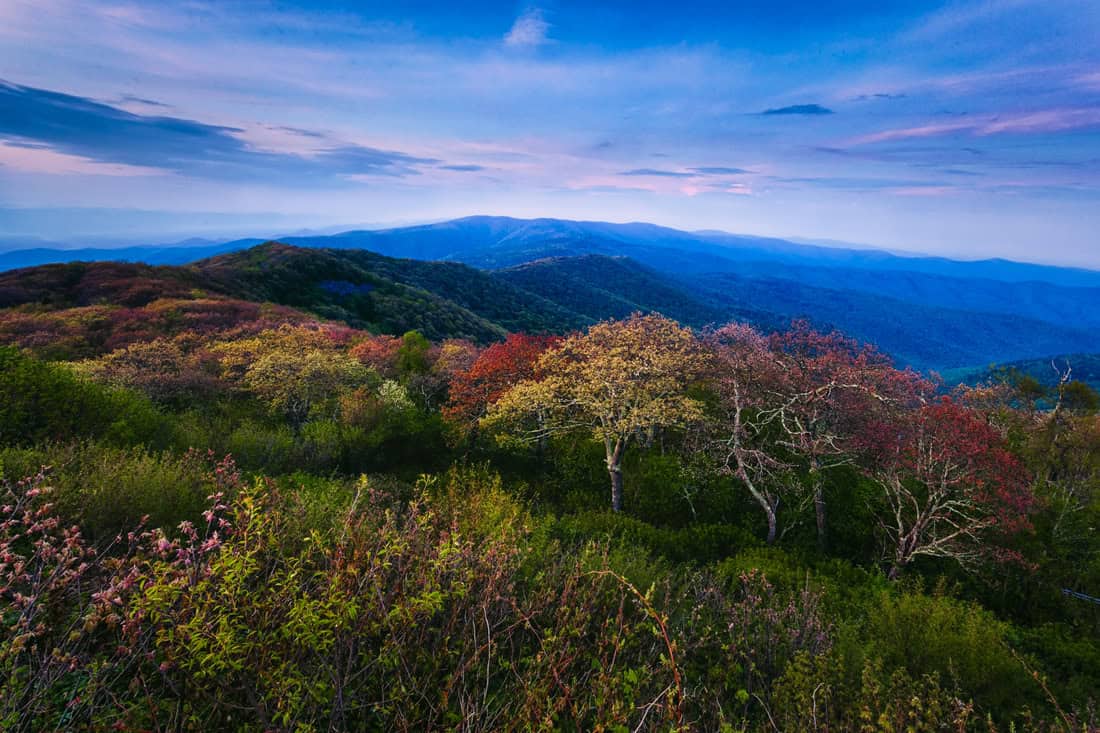
- Elliott’s Knob and Crawford Mountain sit in a combined roadless area that is roughly 20,000 acres.
- Ramsey’s Draft Wilderness, which the Shenandoah Mountain Trail links up with, is roughly 13,000 acres.
- The Little River Roadless Area is almost 30,000 acres.
- North and South Massanutten Mountain (the area that we all admire from town) combined make up over 20,000 acres.
How would your life be impacted if these areas all lost protections?
- Are you ready for more fire like we had back in 2023?
- More car conflict in the areas that we go to get away from the dangers of cars?
- Worse hunting and fishing habitat?
- Poor water quality due to logging runoff?
I do not think we want to experience any of these negative impacts that are associated with rescinding the roadless rule.
Bills Worth Calling About
It is not all bad, though; multiple pro-public lands bills are making their way through Congress. You can call your representatives and ask them to support:
- Public Lands in Public Hands Act
- Public Lands Integrity Act
- Public Lands Workforce Stability Act
- The Legacy Restoration Fund
The Legacy Restoration Fund is critical to the health of our public lands. The funding for the fund expired in September of 2025, leaving a $41 billion maintenance backlog. The good news is that there are bills in the House and Senate aimed at addressing this backlog by investing $9.5 billion over five years to restore our public lands. Click here to send a message in support of the Legacy Restoration Fund
It’s Also About Our Economy
I will finish with this:
- 34% of the racecourse for the Grindstone Trail Running Festival is in an inventoried roadless area.
- 12% of the Massanutten Mountain 100 is in an inventoried roadless area.
- 23% of the Bel Monte Endurance Races are in an inventoried roadless area.
Explore the map that Runners for Public Land has created. All three of these races will be impacted if the roadless rule is rescinded. Not only would this be bad for land preservation, but it would also be bad for our economy. Fewer people coming to these races will hurt our thriving outdoor recreation economy. The Grindstone is a UTMB qualifier that people from all over the US and the world travel to Rockingham and Augusta County to race the trails we have in our backyard.
This Is Worth Protecting
This is worth protecting. We have a chance to fight back on this shortsighted land grab.
If and when the public comment period on the proposed rescinding process goes live, do not wait, do not hold back, and please tell your friends, training partners, and neighbors about this issue. It is expected that the comment period will only be a few weeks, which is much shorter than comment periods have been in the past for changes that have a national impact.
President Clinton could have gone to the vast wilderness out west, but he picked Reddish Knob to announce one of the most impactful land preservation rules in our country’s history. We should wear that as a badge of honor.
Call Tim Kaine, Mark Warner, and Ben Cline. Call your State Senator and Representative as well. This is something that they all need to hear about.
What do you want the future of the National Forest system to be?