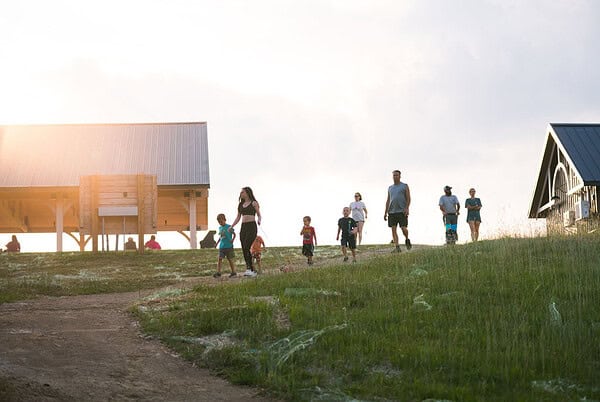

The trails you ride on the North River Ranger District — Wild Oak, Wolf Ridge, Narrowback Mountain, the gorge crossings — exist because The Coalition has spent two decades fighting for them. Over $1.3 million in trail investment. Thousands of volunteer hours. A partnership with the George Washington National Forest that the Forest Service itself has called a model for the country.
Right now, there are bipartisan bills in both chambers of Congress to extend the Legacy Restoration Fund — the federal funding mechanism that keeps beloved trails safe and open to the public. The Senate bill passed out of Committee on June 17th. The House bill is expected to move soon. Congress is targeting passage by July 4th. Take 2 minutes to share your support with your members of Congress today.
What expired — and what’s at stake
The Legacy Restoration Fund, created by the Great American Outdoors Act in 2020, was the federal government’s primary mechanism for addressing decades of deferred maintenance across America’s public lands. For the U.S. Forest Service alone, it provided up to $285 million per year — 15% of total fund appropriations — to chip away at a maintenance backlog that has now grown to $41 billion across all federal land management agencies.
That fund expired in September 2025.
There are now bipartisan bills in both chambers to extend it. The America the Beautiful Act (S. 1547), led by Senators Steve Daines (R-MT) and Angus King (I-ME), passed the Senate Energy and Natural Resources Committee by unanimous voice vote on June 17, 2026 and is heading to the Senate floor. In the House, Natural Resources Committee Chairman Bruce Westerman and Ranking Member Jared Huffman introduced the bipartisan Great American Outdoors Act 250 (H.R. 9250), which had a committee field hearing — an encouraging sign of momentum from both parties. Both bills target passage before July 4th — $1.9 billion per year for five years, $9.5 billion total.
That’s the window. Join the chorus of trails and public lands supporters nationwide asking Congress to act.
What this means for the North River
The George Washington & Jefferson National Forest is already an active Legacy Restoration Fund recipient. Federal records show the forest received LRF funding in FY2024 for two documented projects: a replacement of a 40-year-old wastewater treatment plant serving multiple campgrounds in a high-use recreation complex, and a multi-site reconstruction of popular waterfall trails — including trail bridges, handrails, stairs, boardwalk sections, and parking lot repairs.
Those are exactly the kinds of projects on the North River Ranger District that need the same attention:
- North River Campground is a CCC-era facility — original construction from the 1930s. It currently has vault toilets only, with no potable water. Infrastructure of this age belongs squarely in the Forest Service’s deferred maintenance inventory.
- The trail network — including the nine river crossings on the North River Gorge Trail, the heavily-trafficked North River Trail #539, and dozens of miles across Wild Oak, Wolf Ridge, Narrowback, and Shenandoah Mountain — carries significant recreational use. Documented conditions include waterlogged tread, deep erosion channels, and aging trail bridges that require capital-level replacement beyond what annual operating budgets cover.
- Forest roads like FDR 95 (North River Road), FDR 96, and FDR 85 (Shenandoah Mountain Road) provide the access that makes all recreation in this district possible. Forest roads are one of the largest categories of Forest Service deferred maintenance nationally — and they get more expensive to fix the longer repairs are deferred.
Critically: the Legacy Restoration Fund covers trails directly — not just roads and developed facilities. The Forest Service manages 163,000 miles of trails and 7,400 trail bridges nationally. Reauthorization means that pipeline of investment continues.
The Coalition’s role — and Congress’s
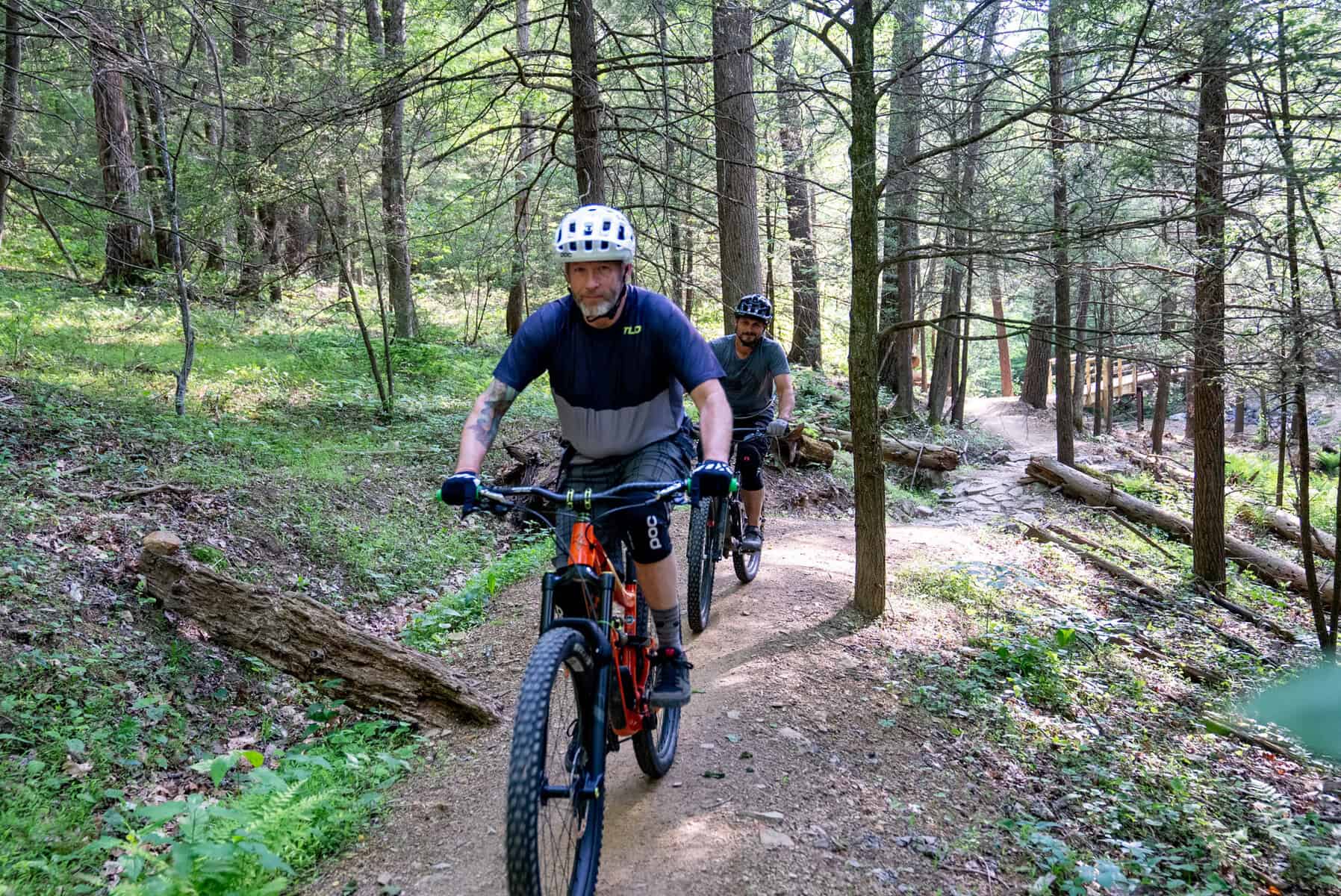
The Coalition has invested over $1.3 million in trails on the North River Ranger District. We’ve built Narrowback Mountain Trail, rebuilt sections of Wolf Ridge, Wild Oak, Bridge Hollow, Lookout, and Shenandoah Mountain. We’ve leveraged federal recreational trail grants with a 20% cash and volunteer match, logging more than 1,000 volunteer hours every year. The Forest Service gave us their Chief’s Volunteer Enduring Service Award in 2017, with District Ranger Mary Yonce saying: “I am convinced the Shenandoah Valley is a far better place to live with The Coalition here.”
That partnership only works if both sides show up. Volunteer hours and recreational trail grants can build and maintain trails. They cannot replace aging wastewater systems, reconstruct collapsed road surfaces, or fund the capital-level trail bridge replacements that safety requires. That’s what the Legacy Restoration Fund does.
Without reauthorization, the $41 billion federal backlog keeps compounding. Campgrounds close. Roads degrade. Trailheads become inaccessible. The Shenandoah Mountain 100 — and the economic activity it generates for Harrisonburg and the Valley — depends on a trail network that depends on federal investment.
Tell Congress to Extend the Legacy Restoration Fund →
Already contacted Congress as an individual? If you have authority to act on behalf of your organization, sign on to the organizational support letter →
The Legacy Restoration Fund is authorized under the Great American Outdoors Act (P.L. 116-152). The America the Beautiful Act (S. 1547, 119th Congress) was reported favorably by the Senate Energy and Natural Resources Committee on June 17, 2026. Sources: U.S. Forest Service GAOA Dashboard; Senate Energy Committee press release; Outdoor Alliance.