
Recently, Coalition Executive Director Kyle Lawrence joined Karl Waizecker of Kline May Realty for a wide-ranging conversation about transportation, trails, safety, economic development, and what it all means for the future of our region.
The discussion covered everything from the Shenandoah Rail Trail to Bikes for Neighbors, from downtown bike infrastructure to the future of Massanutten’s Western Slope. Top line takeaway?
Trails and active transportation are not “nice-to-haves.” They are core infrastructure that shapes the future of our communities.
From bike club to community builder
Kyle began by reflecting on how the Coalition has evolved over the past two decades, from its origins as a bike-club-adjacent organization into a broader community movement focused on walking, biking, trails, and active transportation.
“The Coalition occupies a really interesting space, coming from a history of being bike club-centered and moving into a broader community organization.”
That work includes everything from sidewalks and greenways to natural surface trails in the National Forest, because access takes many forms.
“Our goal is to make walking, biking, active transportation and outdoor recreation more accessible, specifically through trails.”
The Shenandoah Rail Trail: a once-in-a-century opportunity
If there’s one project that captures the Coalition’s long-term vision, it’s the Shenandoah Rail Trail, a nearly 50-mile corridor between Broadway and Front Royal, passing through nine towns and three counties, often alongside Main Street.
“If I had to pick one project for the coalition to work on and drop everything else, it would be the Shenandoah Rail Trail.”
This corridor is uniquely positioned to deliver both recreation and transportation benefits, while creating new opportunities for small businesses, downtown vitality, and quality of life that helps communities retain and attract residents.
“You cannot get another corridor like this. This is a once-in-a-multiple-century opportunity. We’ll never create another corridor like this in the valley, particularly one that goes through the heart of these communities.”
Why it matters: In a hilly region where many rural roads are fast and car-dominated, a flat, traffic-free corridor creates rare access for walking, biking, and rolling, connecting people to towns, destinations, and each other. Buiding Connections: From bike club to community builder
Bikes for Neighbors: direct impact, one person at a time
Some of the Coalition’s work is long-term and systems-focused. Bikes for Neighbors is immediate and personal. Connecting individuals facing transportation barriers with high-quality refurbished bicycles, proper fit, and support.
“For us, the bike is really just a tool… but we do think the bike has some special magic to it.”
Participants aren’t just handed a bike and sent off. The program puts real care into durability, comfort, and confidence, so the bike can truly serve daily life.
“Not only does he get them set up with the right bike, he will take them out on rides, show them how to get places safely and easily.”
How it works: Bikes for Neighbors primarily runs through referrals from direct service partners (schools, agencies, and other community organizations), with flexible options that help create a sense of buy-in and long-term support.
Safety: building connections that make biking and walking attainable
Safety is central to active transportation—and it’s also complicated. Kyle described the balance between the ideal (fully separated infrastructure everywhere) and the real work of making biking and walking feel attainable now, while building the key connections that matter most.
“We would all love to see completely separate infrastructure where we’re all riding bikes separate from cars, but that’s not realistic.”
In Harrisonburg, greenways have created a strong foundation. The next challenge is connecting those networks on existing streets, especially through downtown.
“A really exciting project will be delivering the Liberty Street Cycle Track through downtown, which will physically separate a whole lane of traffic… you’ll be separated from cars.”
Another prominent example: the new Route 33 bridge crossing I-81 is slated to include a shared-use path, an investment that could shape safe access for generations.
“If you don’t get that when the bridge is built, it might be 100 plus years before someone builds a new bridge and puts that in.”
And Kyle underscored a reality advocates know well:
“Transportation is a long game… the roads and things being built now were planned often 10 to 15 to 20 years ago.”
Massanutten Western Slope: expanding a beloved trail system close to home
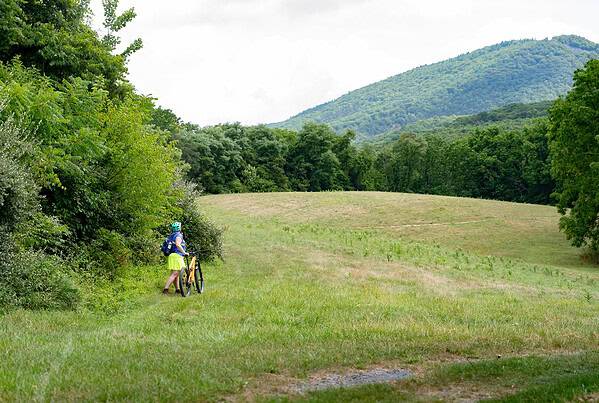
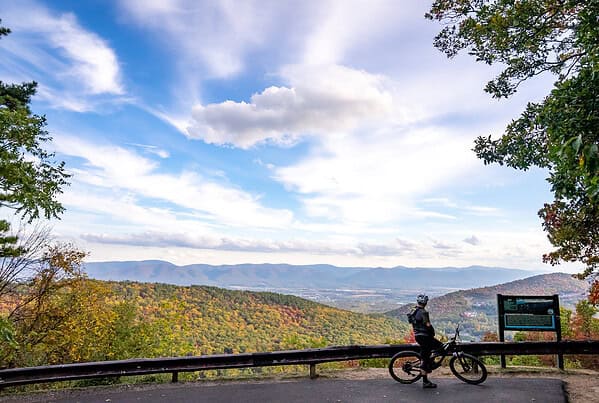
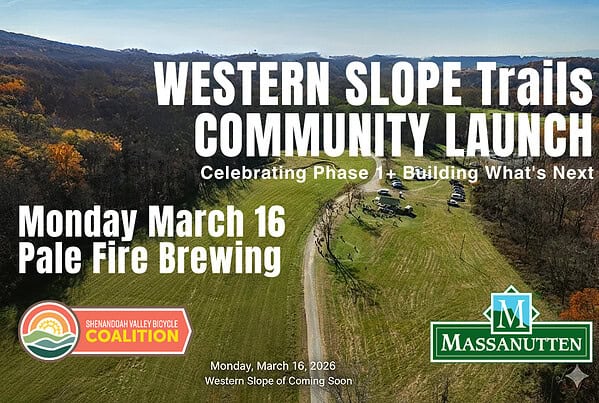
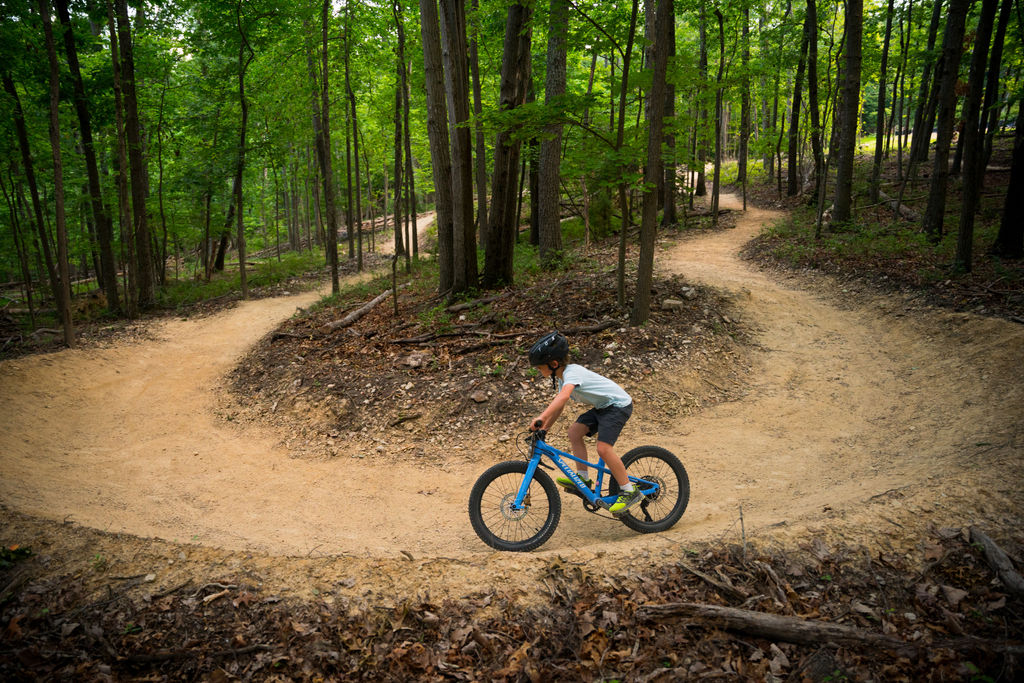
The Western Slope of Massanutten is one of the most popular trail systems in the region—and it’s remarkably close to town. The Coalition’s partnership with Massanutten Resort has enabled a model that combines passes, reinvestment, volunteers, and professional trail builders to grow and maintain the system.
Now, that work is scaling up:
“We have a little less than 30 miles of trail out there now… and we’re poised to add another 15 to 20 miles… in coming years.”
It’s a strong example of what community partnerships can build when there’s shared commitment and a long-term vision.
Looking ahead: investing in public lands and natural surface trails
Beyond Massanutten, the Coalition has helped deliver significant trail investments across the National Forest and surrounding communities, leveraging federal grants, local partnerships, and long-range planning.
“We’ve invested about a million dollars in federal grants in natural surface trails in the forest over the past decade.”
Upcoming and current work includes trail projects at Seven Bends State Park and Sunset Park in Waynesboro, as well as a broader planning effort to map the future of National Forest trails west of Harrisonburg.
Buiding Connections: From bike club to community builder
The big picture: infrastructure that shapes community
From rail trails to cycle tracks, from refurbished bikes to mountain singletrack, the throughline is clear: active transportation is about access, community health, and long-term resilience.
Want to get involved? Visit svbcoalition.org to learn more about the Shenandoah Rail Trail, Bikes for Neighbors, upcoming trail planning efforts, and ways to support this work.
Thanks for listening—and stay tuned for more conversations about how we build a more connected Shenandoah Valley. Buiding Connections: From bike club to community builder