
Snow as Community and Infrastructure Builders
At 31, I get more excited about a snow day than most kids. Days out, I’m following the weather out of anticipation for hopeful play, and find myself preparing by making loads of snacks for the all-day marathon of snow activities: cross-country skiing from the door, sledding with friends and wood-stove warming to follow, slumber parties in case of power outages, ….maybe some shoveling. Snow isn’t a change in the weather, it changes how we live together.
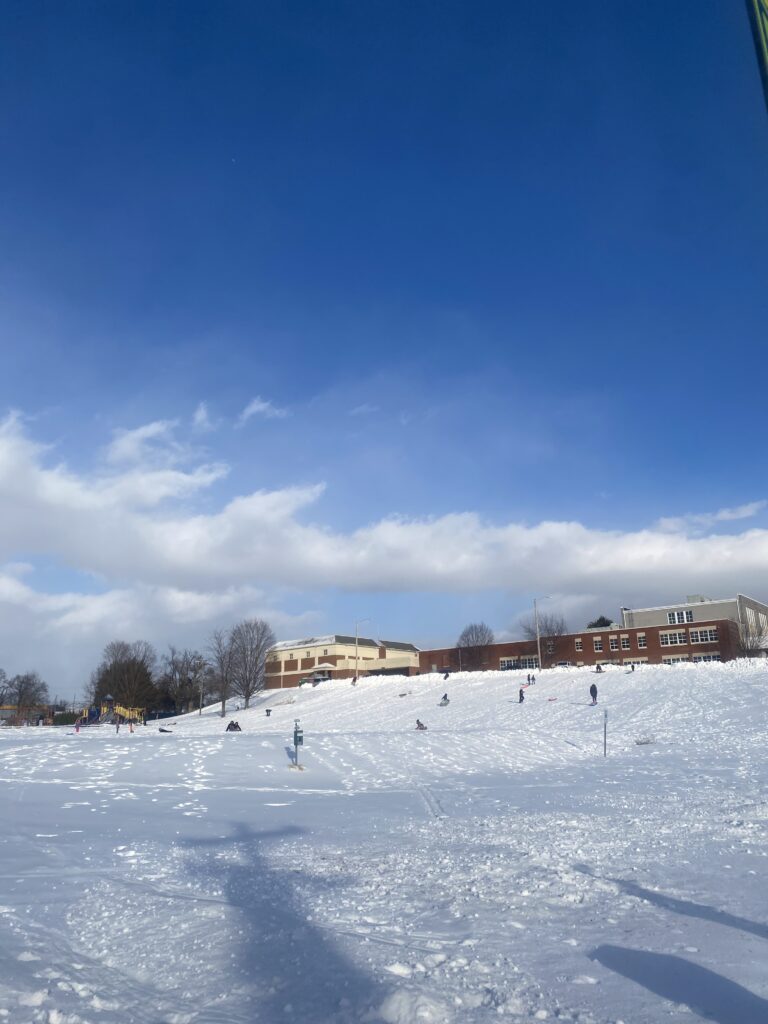
There are a few storms that stand out in my mind as a kid. School was canceled for weeks, time slowed down, and priorities immediately shifted. Everything on the calendar was erased, and the entire city became a playground.
So what actually changes during a snowstorm, besides a blanket of white on the ground?
-
-
- We can’t drive: obligations that require us to leave the house disappear.
- We play: there’s nothing else to do but connect, and support one another.
-
Snow gives us full permission – without guilt – to step away from productivity, errands, and expectations. Our lives are shaped by our environment, and when our environments are built around the car (that is stuck in the snow), our pace of life changes.
On a snow day, the systems we rely on quietly fail. Cars are sidelined and streets become quiet. The same roads meant for speeding suddenly feel safe enough to walk on. And almost instinctively, we gravitate toward sledding hills, parks, sidewalks, and streets – to public space, and to each other. The kinds of spaces we should be able to access any day of the year, not just after a storm.
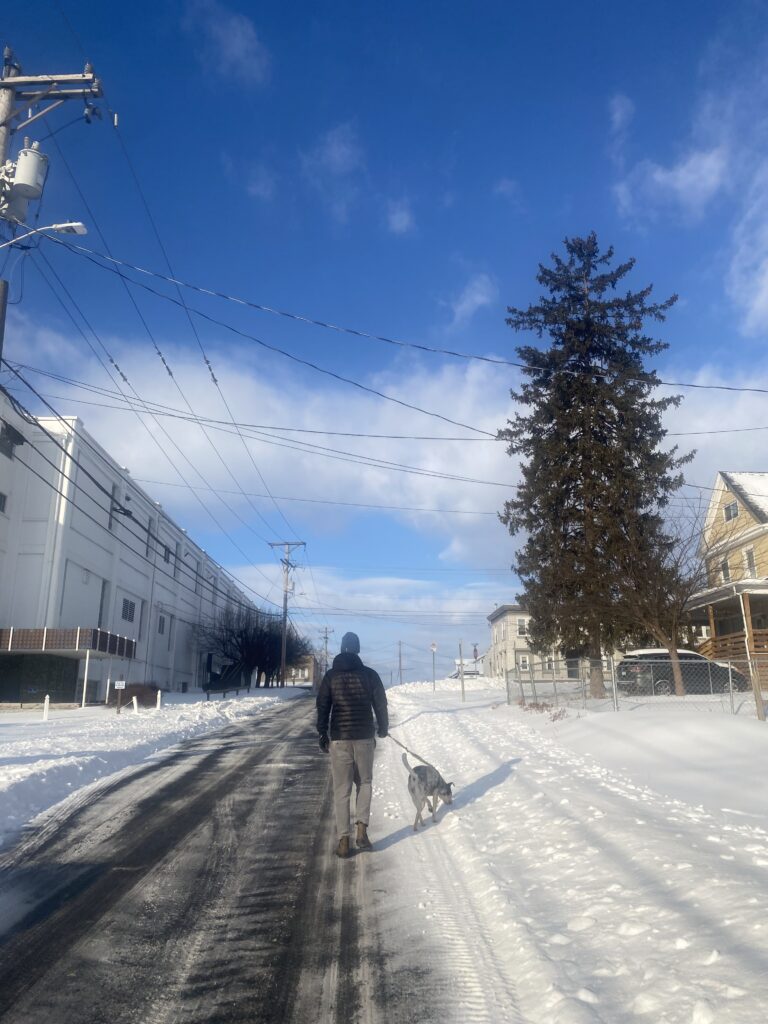
Snow reveals what our cities could be.
One of the clearest examples of this is something called a sneckdown. As The Friendly City Urbanist explains, the term was coined by Streetsblog founder Aaron Naparstek in 2014, meaning “snowy neckdown.” A neckdown—also known as a curb extension—narrows roadways at intersections to slow traffic and improve safety.
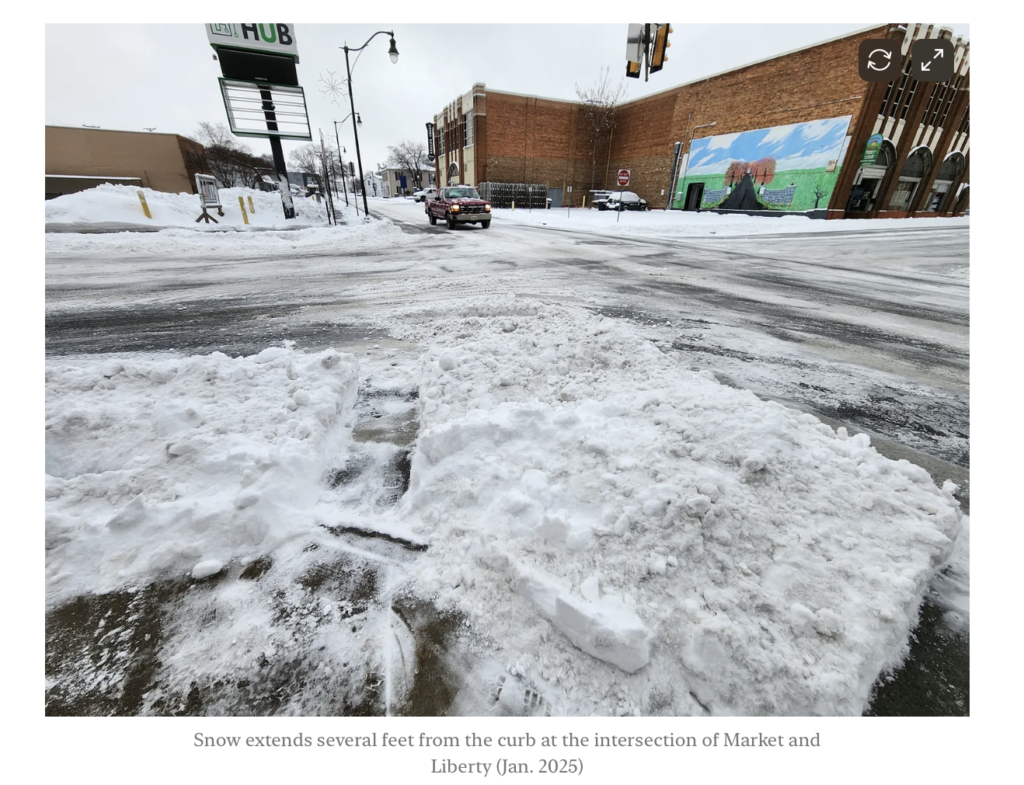
When it snows, piled-up snow naturally creates these curb extensions. And suddenly, we can see how much street space cars don’t actually use.
These snowy “quick builds” reveal the excess asphalt we maintain year-round—space that costs money, encourages dangerous driving, and actively works against safety and community. In places like Eastlake (VIDEO), sneckdowns show where medians could exist instead of unused roadway, reducing maintenance costs, stormwater runoff, and urban heat while creating safer, more pleasant streets.
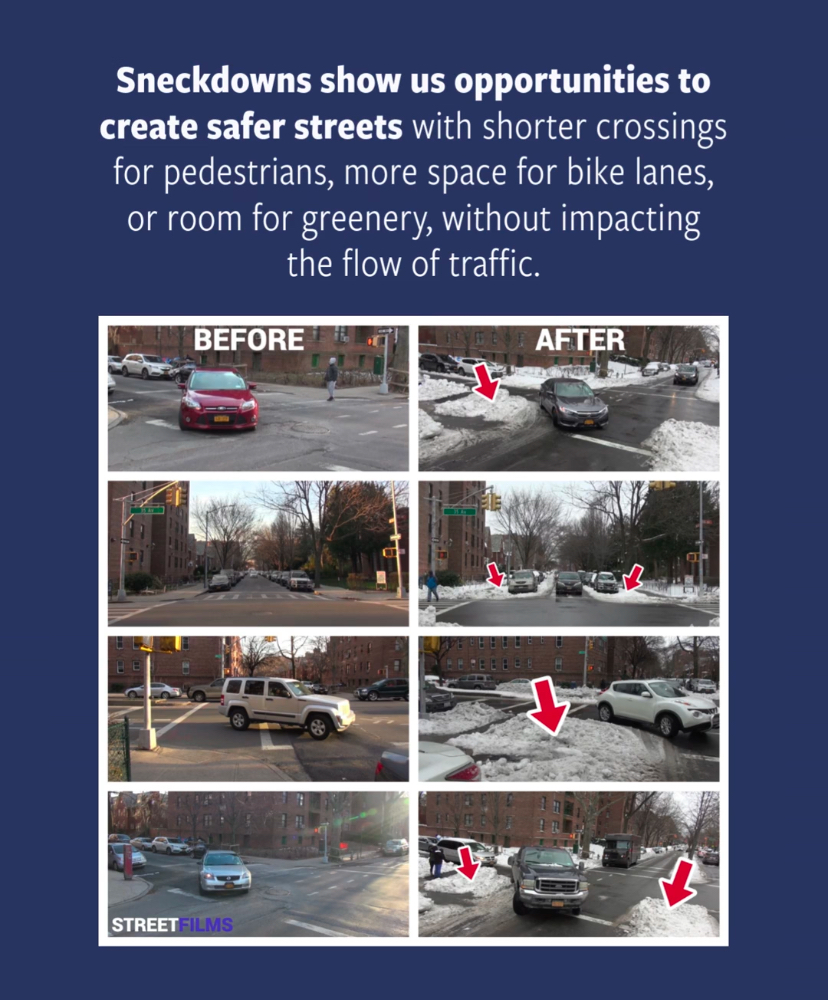
Sneckdowns don’t just show us where cars don’t go—they show us where people could! This could include street improvements from safer crosswalks, wider sidewalks, and protected bike lanes – serving human beings, not just vehicles.
Snow, unintentionally, becomes infrastructure – a temporary experiment that reveals permanent possibilities. Perhaps, that’s actually what’s at the root of the snow day’s magic. Snow strips our cities down to their essentials and reminds us that when the car-centered systems pause, community rushes in.
*And to be clear—I’m not advocating for not plowing roads and sidewalks 😉
Further reading & watching:
-
-
- Snow piles as soft infrastructure (video): https://www.youtube.com/watch?v=YKuYspor_RU
- Reconstructing the Street: Move the Curb (Strong Towns): https://www.strongtowns.org/journal/2023/9/11/reconstructing-the-street-move-the-curb
-